
A few kilometres from the German border, in the heart of the Northern Vosges, Eguelshardt lived through the Second World War on the front line. The commune was awarded the Croix de Guerre 1939–1945 for its conduct during the war.
On the Maginot Line
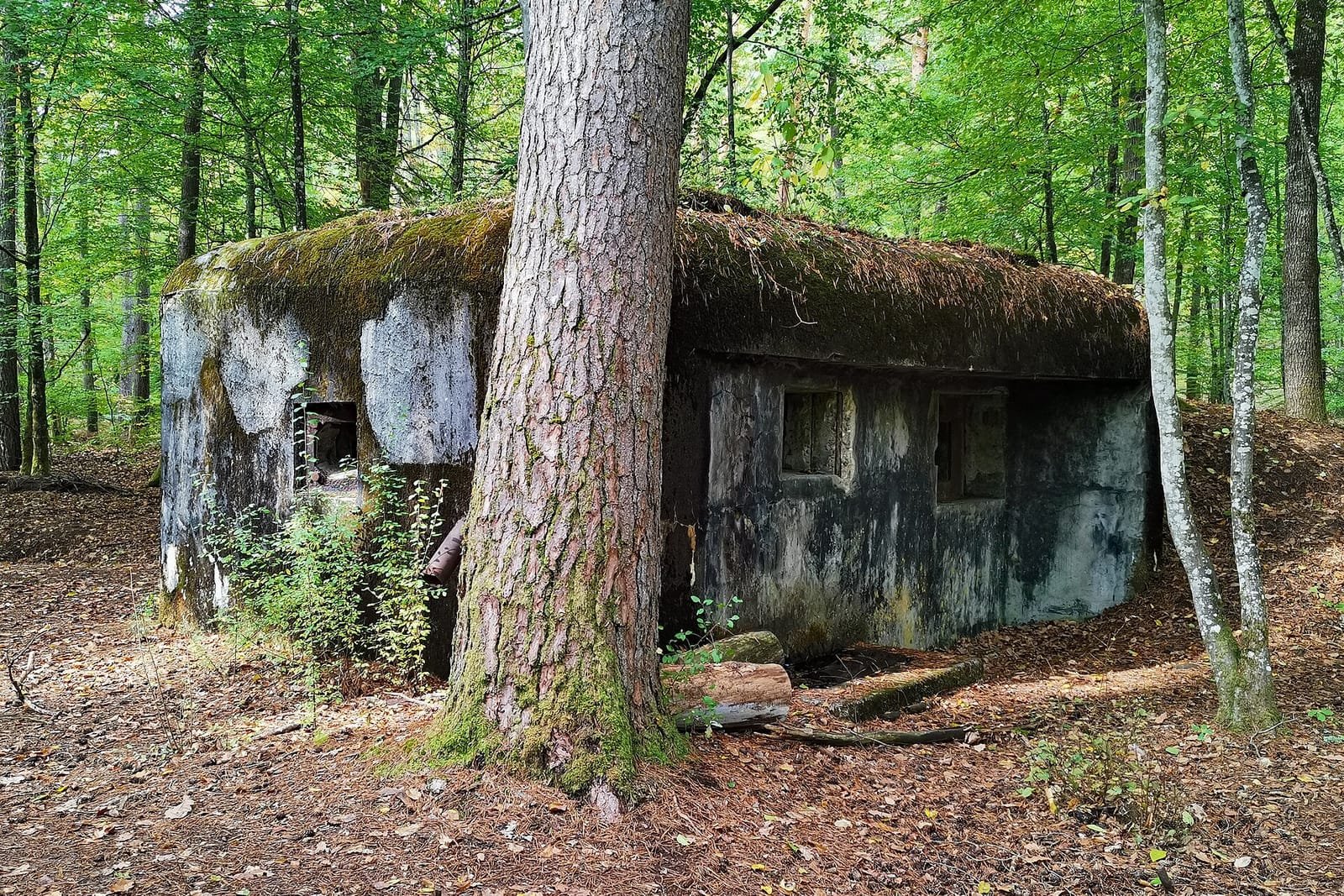
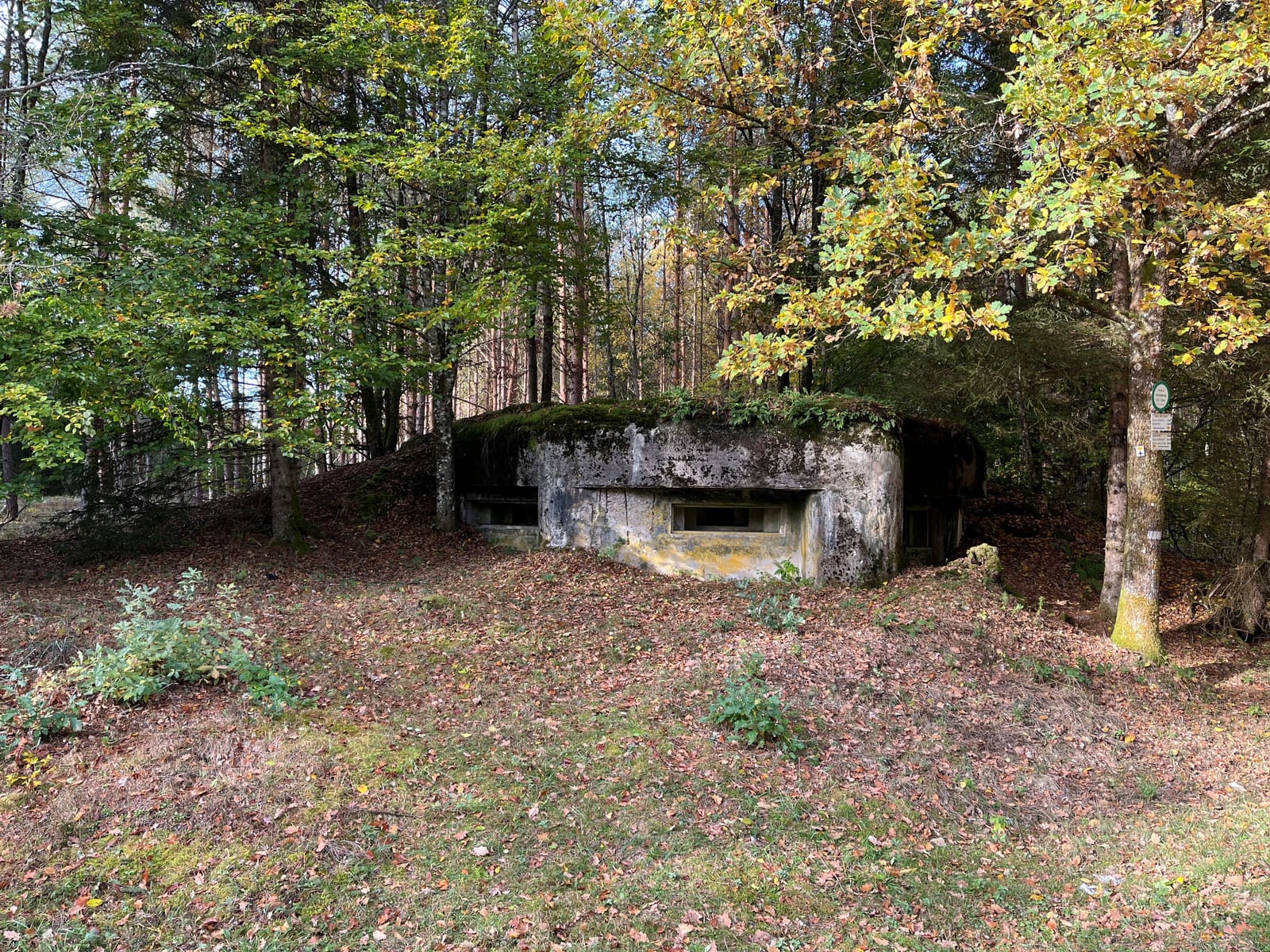
In the 1930s the Eguelshardt forest was fortified as part of the Vosges fortified sector, in the Philippsbourg sub-sector. At the Biesenberg, near Erbsenthal and the chapel of Notre-Dame des Bois, a group of nine casemates and blockhouses blocked the valleys, including an artillery casemate armed with two 75 mm guns.
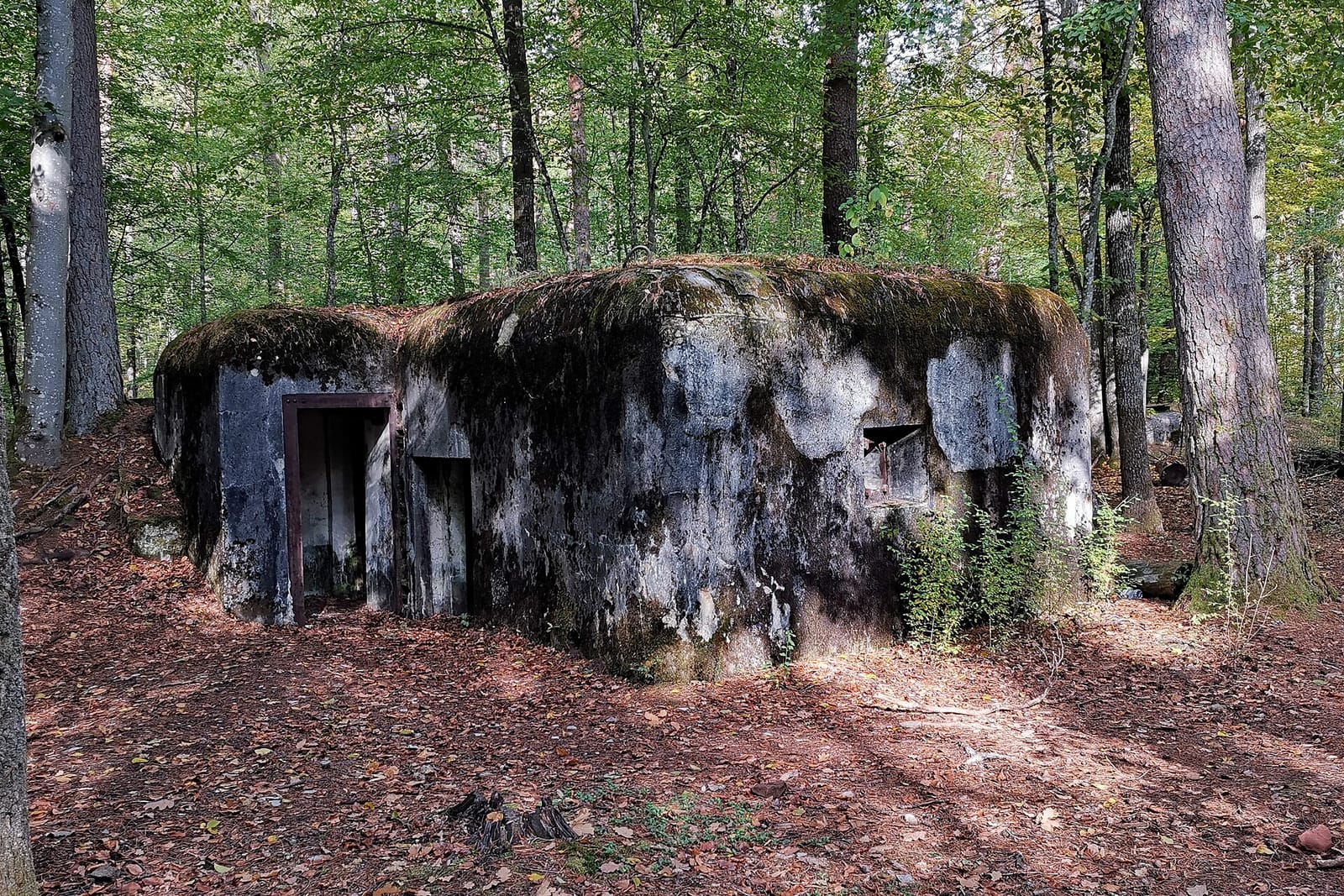
A little further south, the Glasbronn casemate was built in 1932 beside the Erbsenthal forest road, with its lookout and machine-gun turrets. It was manned by the 154th Fortress Infantry Regiment. A small dam made it possible to flood the valley to defend it.
The evacuation
On 1 September 1939, like every village in the “red zone” near the border, Eguelshardt was evacuated. The inhabitants left for Saint-Simon, in the Charente, which took in evacuees from the Bitche area. During the “Phoney War”, many skirmishes took place in the sector, with losses on both sides.
June 1940
On 22 June 1940, the very day the armistice was signed at Rethondes, fighting was still going on in the Bitche area: German troops were held back in front of the Biesenberg casemates. The Glasbronn casemate was spared by the fighting.
The annexation
After the defeat, the Moselle was annexed in all but name by the Third Reich. From 2 August 1940 the village was once again called by its German name, Egelshardt. As everywhere in annexed Moselle, young people had to serve in the Reich Labour Service (RAD) and were then forcibly conscripted into the German army. Jean-Pierre Letzelter tells of his conscription and his escapes in his testimony: Incorporated in the RAD.
The winter of 1944–1945
In autumn 1944 the Allied armies drew near, and the village was bombed in December 1944. On the night of 31 December, the German army launched Operation Nordwind in the Bitche area and northern Alsace, its last offensive on the Western Front. It failed at the end of January 1945, but the front stayed frozen through the winter in the forests of the Northern Vosges.
Eguelshardt was liberated by American troops on 28 March 1945. In 1945 the Germans blew up the Glasbronn casemate so that the Americans could not use it.
The damage
The fighting and bombing left deep scars. The Bannstein sawmill was destroyed in 1944–1945, as were the buildings of Erbsenthal, of which only the chapel of Notre-Dame des Bois remains. The church organ, built in 1865 by the Verschneider workshops, was destroyed too; it was replaced in 1948 by an organ by Willy Meurer.
The Croix de Guerre
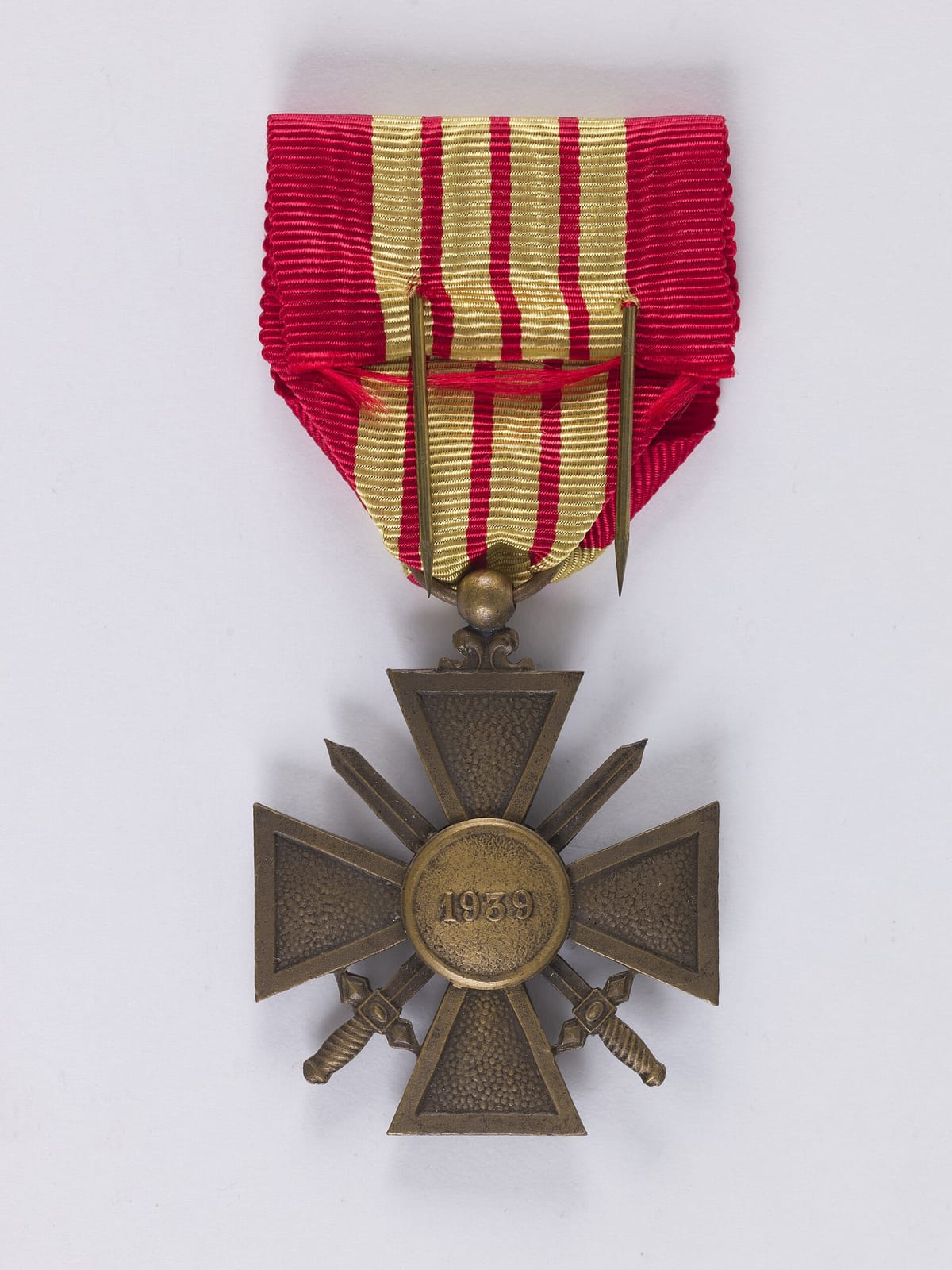
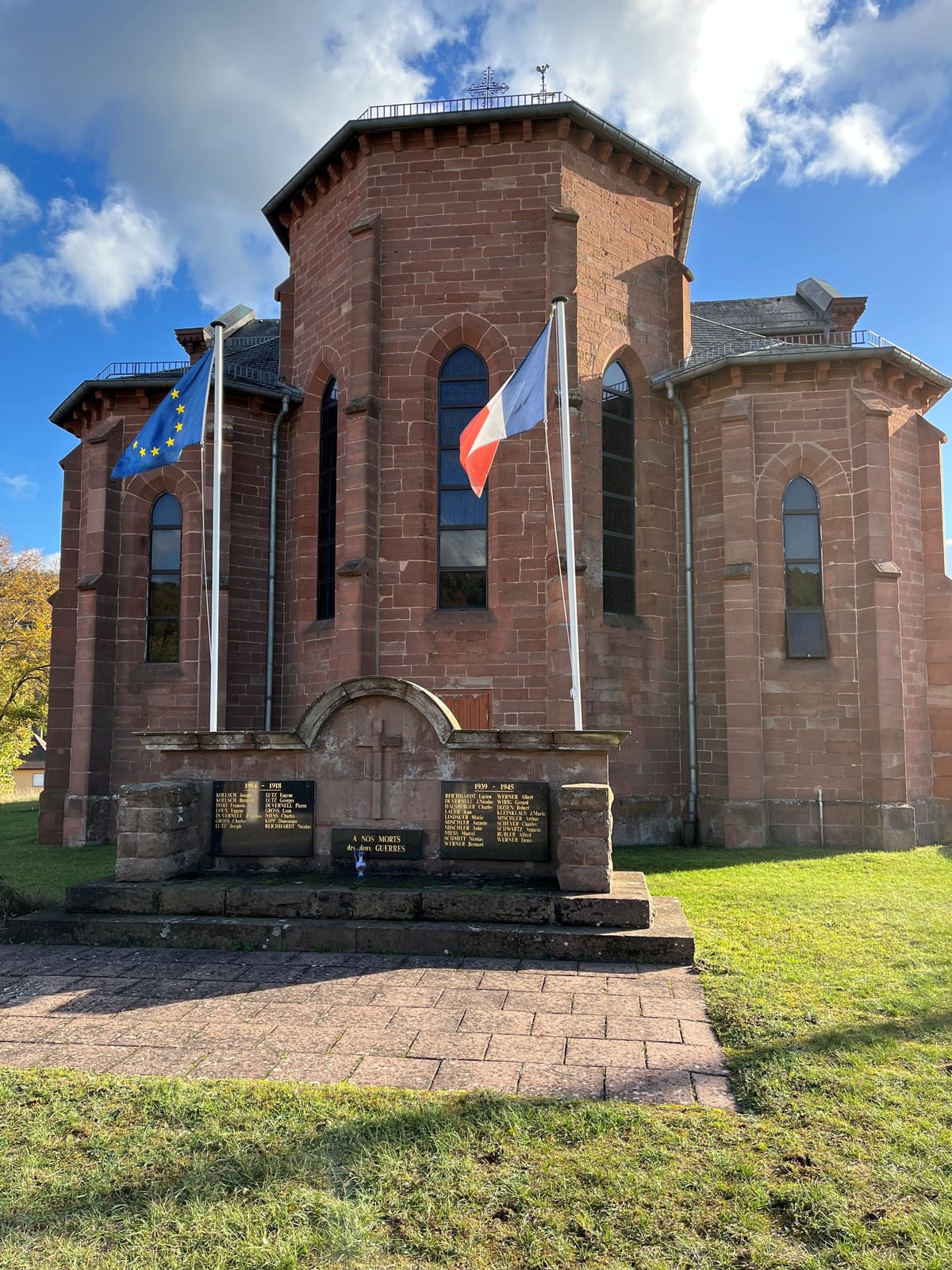
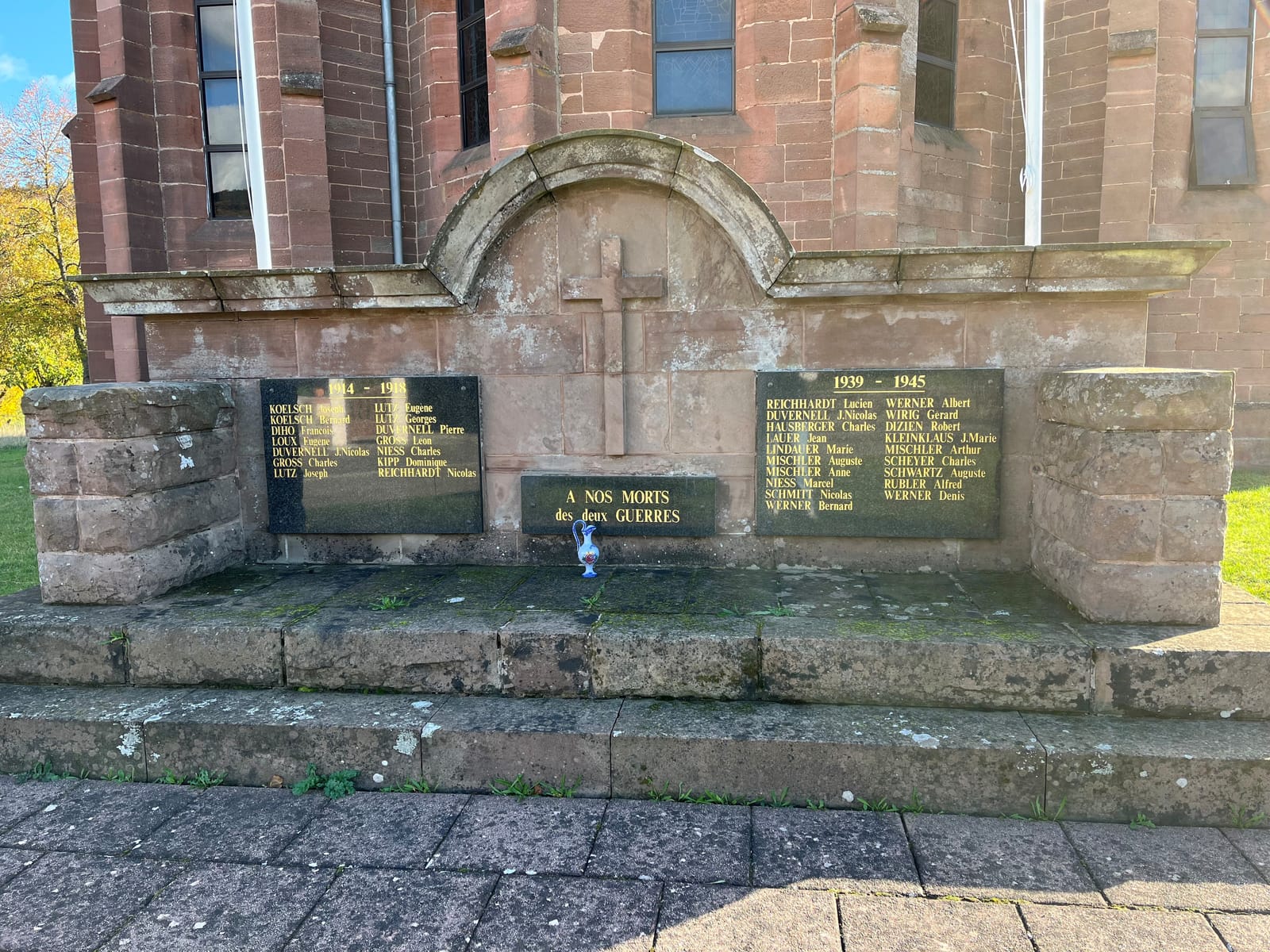
On 1 July 1948 the commune was awarded the Croix de Guerre 1939–1945 with bronze star, for “its sacrifices, the help given to escaped prisoners of war and its attachment to France”. The war memorial near the church remembers the victims of both world wars.
To learn about the village’s earlier history: From hamlet to village.
Images: Maginot Line, PaulT (Gunther Tschuch), Wikimedia Commons (1, 2), licence CC BY-SA 4.0; Croix de Guerre 1939, Musée de la Libération de Paris – Musée du Général Leclerc – Musée Jean Moulin (Paris Musées), CC0. Sources: French Wikipedia (Éguelshardt, Casemate de Glasbronn, Opération Nordwind, Bannstein), Comité d’histoire régionale Grand Est.


